Engine Misfires, Shaking & Power Loss: How Pontiac Mechanics Find the Real Cause
A plain‑English guide to the common causes of misfires, shaking, and loss of power — and the step‑by‑step diagnostic checks Pontiac Auto Repair uses to avoid guesswork and unnecessary parts.
What 'misfire' and 'power loss' actually feel like
If your car stumbles at idle, jolts under acceleration, or suddenly feels lethargic on the highway, you’re experiencing the symptoms drivers describe as misfires, shaking, or power loss. Those symptoms can come from lots of different systems — ignition, fuel, air, sensors, or internal engine issues — so the first rule is: don’t guess. A careful, stepwise diagnostic approach finds the real problem faster and keeps you from paying for parts you don’t need.
Ignition system problems: the usual suspects
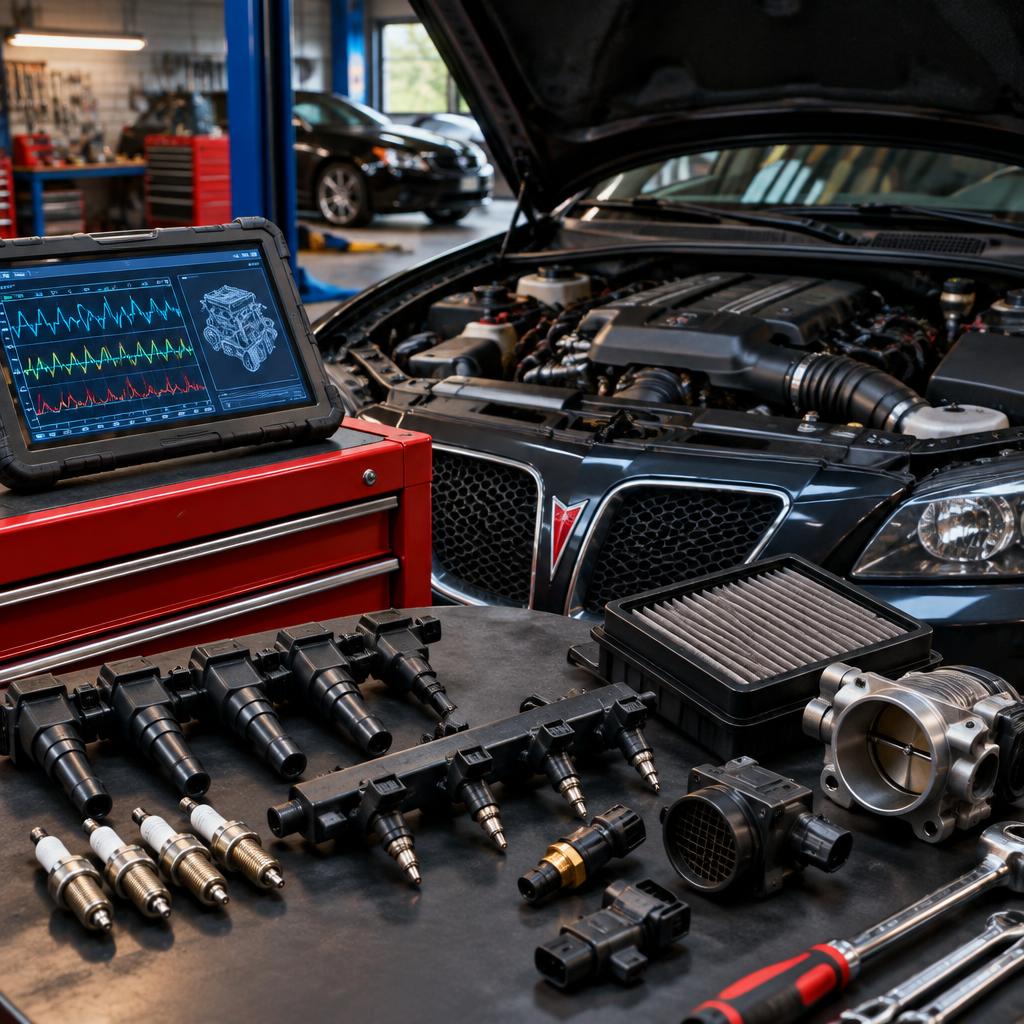
Worn spark plugs, failing ignition coils, or damaged plug wires are common causes of single‑cylinder misfires and rough running. Symptoms tend to include rough idle, a persistent cylinder code, and sometimes poor fuel economy. Mechanics start with visual checks (plugs, connectors, boots), swap coils between cylinders to see if the misfire moves, and use an oscilloscope or spark tester when needed. Because ignition parts are relatively inexpensive, we check them early — but only replace what testing shows is bad.
Fuel delivery issues: pumps, filters, and injectors
If the engine starves for fuel you’ll notice hesitation or loss of power under load. Causes include clogged fuel filters, weak fuel pumps, or dirty/failing injectors. Technicians measure fuel pressure, perform flow or injector balance tests, and inspect the fuel filter and lines. Often the fix is simple — a clogged filter or a bad injector — but accurate testing keeps the diagnosis targeted instead of throwing parts at the problem.
Air, intake leaks, and sensor faults that mimic misfires
Unmetered air from a vacuum leak, a dirty mass airflow (MAF) sensor, or a sticking throttle body can upset the air‑fuel mix and trigger rough running. Many modern cars also rely on sensor input (MAF, MAP, O2) and cam/crank position sensors; a bad sensor can produce the same driveability symptoms as a mechanical fault. Mechanics check stored OBD‑II codes and freeze‑frame data, visually inspect intake hoses, and may do a smoke or vacuum test to find leaks before replacing sensors.
When electronics and diagnostics matter most
OBD‑II codes are a great starting point but they don’t always tell the whole story. A sensor code points to an abnormal signal, not necessarily the failed part. Good shops interpret codes with freeze‑frame data, live sensor readings, and circuit checks. That prevents replacing a sensor that’s electricaly fine but getting bad input from wiring, connectors, or another failing component.
Mechanical checks for compression, timing, and internal issues
If the basic electrical, fuel, and intake checks don’t find the problem, the next step is mechanical testing. Compression or leak‑down tests reveal cylinder sealing or valve issues. Timing checks confirm the belt/chain and cam timing. These tests tell whether a serious internal issue is present and whether an expensive repair or engine replacement is really needed. In many cases a root cause is repairable — and a focused diagnostic path often avoids unnecessary engine replacement.
How Pontiac Auto Repair approaches diagnostics — practical and honest
At our shop in Pontiac we follow a test‑first workflow: listen to the customer’s symptoms, scan for codes, perform targeted electrical and fuel tests, and move to compression or smoke testing only if needed. Customers in our reviews consistently note honesty and fair pricing — that reflects our goal of explaining findings clearly and recommending only what the tests show. If you’re noticing misfires, shaking, or loss of power, bring your car by 660 West Huron Street or call ahead. We’ll walk you through the checks and give you straightforward options, not guesses.
Article by
Pontiac Auto Repair
Meet Jay, our honest owner and recovering automotive engineer who's all about building real relationships, not emptying your wallet. He knows word-of-mouth and thrilled repeat customers are the heart of success in today's online world—just check our bustling shop and glowing reviews. Whether it's routine maintenance or complex fixes, we're here for straightforward, reliable solutions. Swing by or give us a call today for an honest chat about your car troubles.