Shoulder Pain in Alvin, TX: When to See an Orthopedic Surgeon vs. Waiting It Out
A practical local guide to common causes of shoulder pain, safe home-care steps to try first, red flags that require prompt attention, and when it makes sense to schedule an orthopedic evaluation in Alvin.

Why this guide matters in Alvin
Shoulder pain is one of the most common complaints seen in primary care and orthopedics. For people in Alvin, TX, deciding whether to manage symptoms at home or book an orthopedic appointment can be confusing. This guide explains typical causes of chronic shoulder pain, straightforward self-care you can try safely, clear warning signs that need timely evaluation, and what to expect if you see an orthopedic surgeon locally.
Common causes of chronic shoulder pain
Many cases of ongoing shoulder pain come from soft-tissue problems: rotator cuff tendinopathy or tears, subacromial bursitis, and impingement. Adhesive capsulitis (frozen shoulder) can cause progressive stiffness and limited motion. Arthritis of the glenohumeral or acromioclavicular joints produces activity-related pain and stiffness. Less commonly, labral injuries or instability cause pain with certain movements, and neck problems can refer pain into the shoulder. Understanding the likely cause helps decide whether conservative care is reasonable or an evaluation is needed.
Home care that’s usually safe to try first
If your shoulder pain started without major trauma and you can still move the arm, try conservative measures for a few weeks: modify activities that aggravate pain (avoid heavy overhead lifting or repetitive reaching), apply ice for 15–20 minutes several times daily after activity or heat before gentle stretching, and use over-the-counter pain relievers as directed. Begin gentle range-of-motion and pendulum exercises to keep the joint mobile, and progress to light rotator cuff and scapular-strengthening exercises as pain allows. If you’re starting an exercise plan and have any medical concerns, check with your primary care provider first.
Red flags: when to seek immediate care
Seek prompt medical attention if you experience any of the following: major trauma to the shoulder (fall or collision), obvious deformity or protruding bone, sudden inability to lift or use the arm, severe worsening pain unrelieved by medications, fever or signs of infection, or loss of sensation in the arm or hand. These signs can indicate dislocation, fracture, infection, or nerve injury and should not be managed at home.
When it’s time to schedule an orthopedic evaluation
Consider seeing an orthopedic surgeon if pain or stiffness persists after 4–6 weeks of consistent home care, if motion continues to decline, if you have progressive weakness, or if pain limits daily tasks or work. Patients also consult orthopedics when conservative treatment (physical therapy, activity modification, or injections) hasn’t helped, or when instability or recurrent dislocations are present. Local patients frequently report that a thorough, patient-centered orthopedic exam can clarify the cause and outline next steps.
What to expect at your orthopedic visit
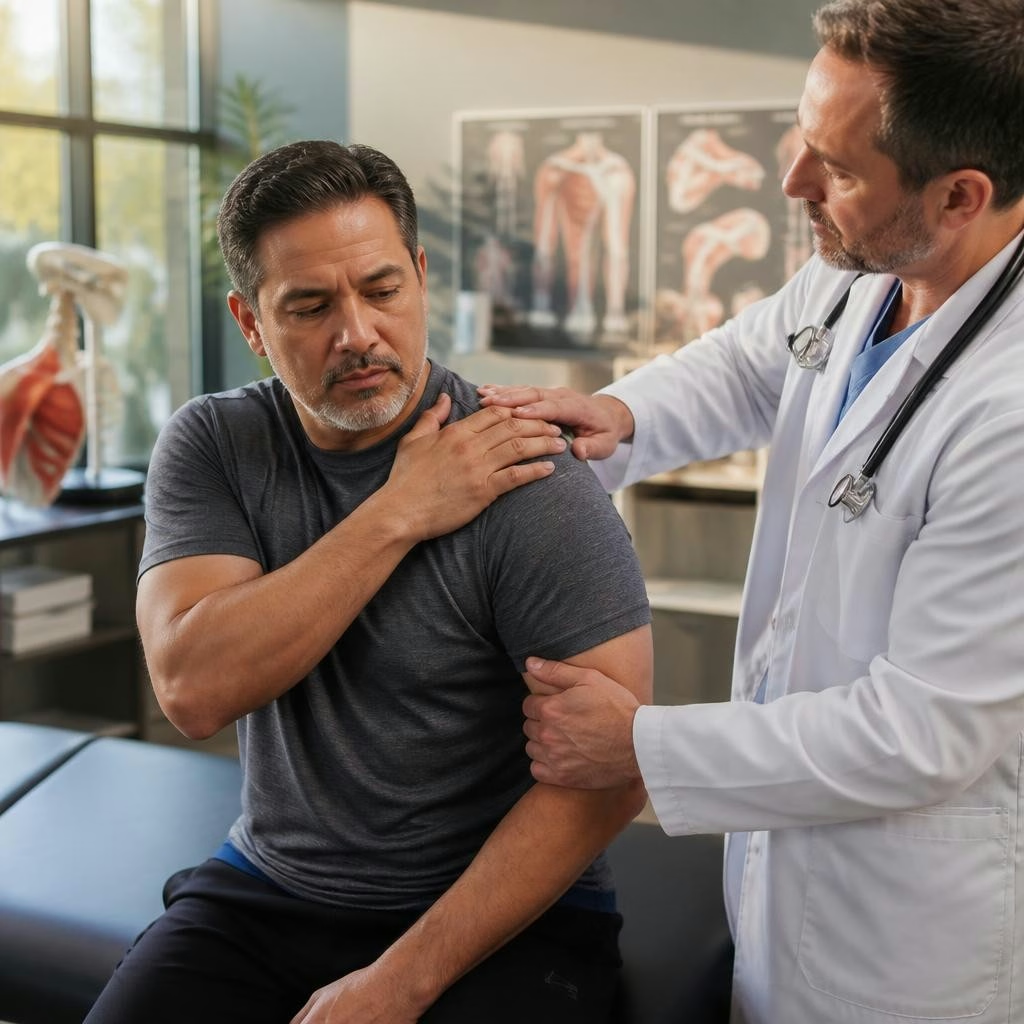
An orthopedic evaluation typically begins with a focused history about how the pain started, what makes it better or worse, and how it affects daily life. The surgeon will perform a physical exam with specific shoulder tests, and may order imaging such as X-rays or an MRI to assess bone, tendon, and labral structures. Treatment options range from a renewed plan of physical therapy and injections to surgical repair for significant tears or instability. Many local patients note that taking time for clear explanations and careful assessment makes the next steps easier to follow.
Practical tips for booking and preparing locally
If you decide to see a local orthopedic surgeon, bring a list of symptoms, prior imaging or reports, current medications, and your insurance information. Be aware that new-patient paperwork may need to be completed online or in the office, so allow extra time on your first visit. While many patients praise the physician’s bedside manner and thoroughness, some have found front‑office communication challenging—calling ahead to confirm appointment details and where to park can save time. If conservative care is appropriate, ask about a clear timeline for improvement so you’ll know whether to return for re-evaluation.
Customer review


Article by
Dr. Schauder - Alvin
Dr. Schauder was born in Detroit, Michigan. He received his undergraduate degree from Albion College, Albion, Michigan in 1981 Summa Cum Laude with a 4.0 GPA, Phi Beta Kappa, Albion Fellow.