Alvin Parents’ Guide to Fractures: When a Broken Toe, Arm, or Leg Needs an Orthopedic Specialist
A practical guide for Alvin parents explaining common childhood fractures (toe, wrist, ankle), when urgent care is sufficient, when to see an orthopedic surgeon, basic differences between casting and surgery, and why follow-up matters for growing bones.

Why this guide matters
Children fall, run, and play — and fractures happen. Many breaks are straightforward, but the right decision after an injury can protect a child’s future mobility and growth. This guide focuses on common pediatric injuries you’re likely to see in Alvin (toes, wrists, ankles and simple forearm or leg fractures) and explains when urgent care is appropriate and when an orthopedic surgeon’s evaluation is important.
When urgent care may be enough
Minor injuries — a stubbed toe that swells but the child can walk, small hairline fractures without visible deformity, or mild ankle sprains — are often evaluated in urgent care. Urgent-care clinicians can take X‑rays, provide pain relief, apply basic immobilization (splints, buddy taping) and advise home care. If the child is alert, breathing normally, and there is no open wound or bone sticking out, starting with urgent care is reasonable for many simple injuries.
Red flags: when to see an orthopedic surgeon
Seek an orthopedic evaluation (or a referral from urgent care) if you notice: a visibly deformed limb or toe, inability to bear weight or use the limb, intense pain not controlled with recommended doses of pain medicine, numbness or tingling, an open fracture (skin broken), or a suspected injury near a growth plate. Growth-plate injuries can affect future bone growth, so an orthopedic surgeon’s assessment is important when the fracture is near the ends of long bones.
Casting versus surgery — what determines the choice
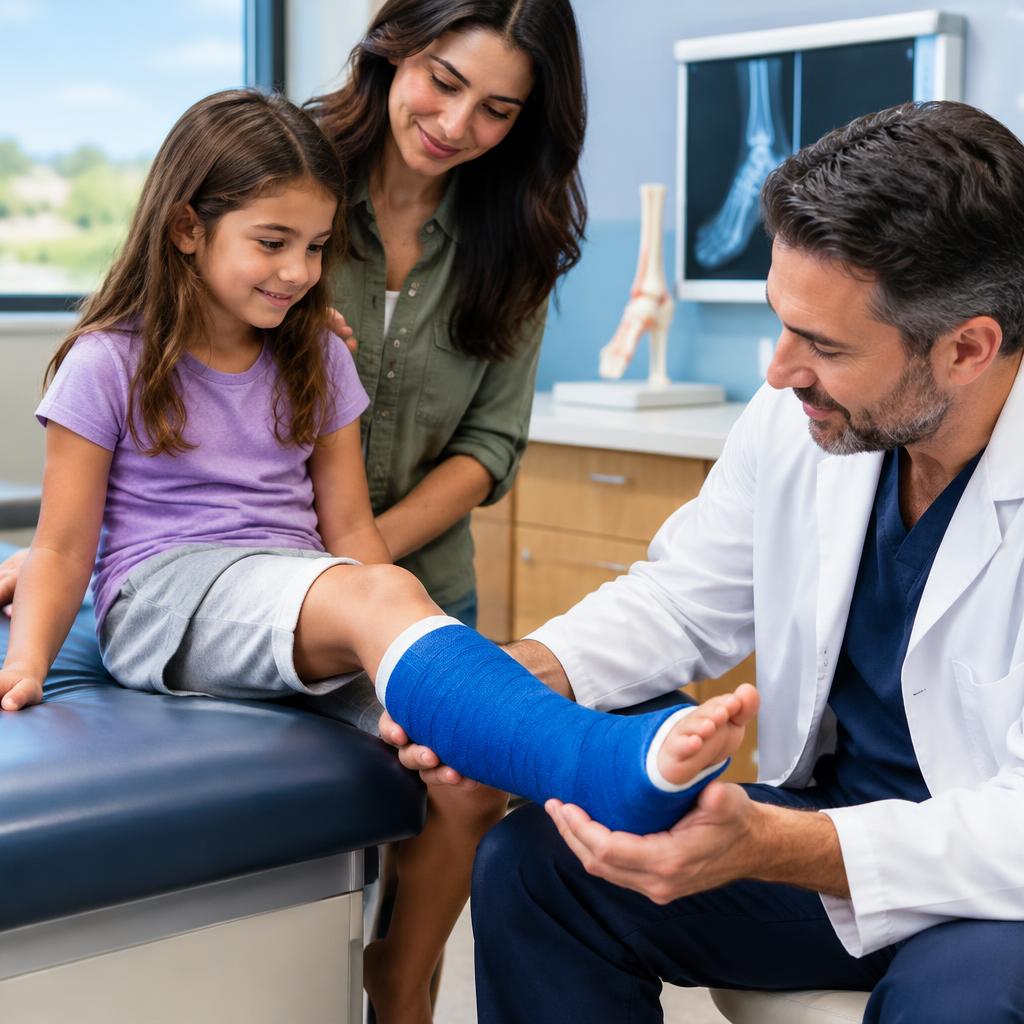
Treatment depends on the fracture’s type, location, amount of displacement and the child’s age. Many simple fractures are treated with casting or splinting to hold bones in place while they heal. Surgery is considered if bones are badly displaced, if the joint is involved, if multiple fragments are present, or if a growth plate is disrupted and alignment cannot be restored with a cast. An orthopedist will explain the rationale, risks and expected recovery time so parents can make an informed decision.
What to bring and expect at an orthopedic visit
Bring any X‑rays or reports from urgent care, a list of current medications and your insurance information. Expect a focused exam, review of images, and a discussion about treatment options and follow-up frequency. Reviews from families in the area note that being seen promptly and having questions answered clearly makes a big difference; many parents appreciate offices that work to fit children into busy schedules and staff who explain care steps in plain language.
Home care and follow-up: protecting growing bones
At home, follow the orthopedist’s instructions for immobilization, elevation, and ice to control swelling. Keep splints or casts dry and watch for increasing pain, numbness, or changes in skin color — these require urgent reassessment. Follow-up X‑rays are often scheduled to confirm healing and alignment; these checks are particularly important when growth plates are involved so any issues can be addressed early.
Finding the right local orthopedist and managing logistics
When selecting care in Alvin, consider clinical skill and communication. Local families frequently praise providers who combine technical expertise with a calm bedside manner and staff who treat children kindly. At the same time, a few parents note front-desk or scheduling hiccups can happen, so it helps to call ahead, have insurance details ready, and arrive with completed paperwork when possible. If your child’s injury meets the red-flag criteria above, ask for an expedited orthopedic appointment or a direct referral from urgent care to ensure timely specialist follow-up.
Article by
Dr. Schauder - Alvin
Dr. Schauder was born in Detroit, Michigan. He received his undergraduate degree from Albion College, Albion, Michigan in 1981 Summa Cum Laude with a 4.0 GPA, Phi Beta Kappa, Albion Fellow.